
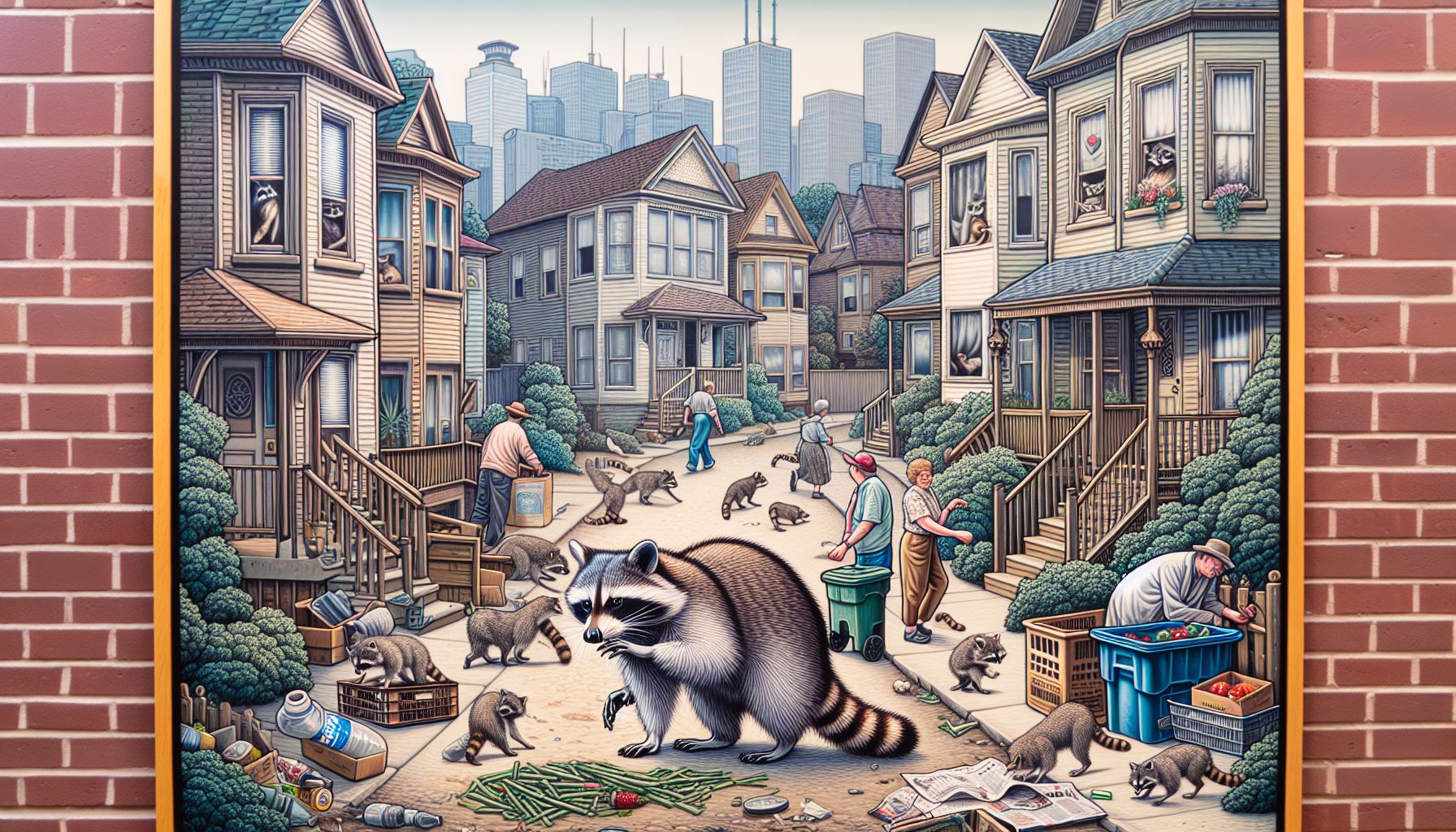
Wildlife often intermingles with urban landscapes, and one of the notable creatures in the cityscape of Toronto is the raccoon. In particular, this article will focus on how these small mammals behave in the unique environment of post-war Toronto housing stock.
Coexistence and Adaptability
Following the Second World War, Toronto experienced a surge in housing construction. These homes, characterized by their structural similarities, have since shared spaces with different wildlife, including raccoons. Raccoons, known for their adaptability, have prominently settled within these domains.
In this housing, one might notice reports of frequent raccoon sightings, particularly during the night. These animals are primarily nocturnal, and they often scavenge around the area in search of food. Toronto’s waste management system, which secures garbage in bins, has seen raccoons develop impressively advanced problem-solving skills to access potential food sources.
Seasonal Patterns
Raccoon behaviour in Toronto also varies with the seasons. During the warm months, raccoons are more active, exploring the area and often causing a ruckus in their nightly scavenging. They take full advantage of the easily accessible food sources, including amenities provided by residents and naturally occurring food like fruits and insects.
Conversely, as winter sets in, raccoons in Toronto become less active. This period, referred to as “torpor,” is characterized by minimal activity and reduced body functions. It’s worth noting that raccoons do not hibernate. Instead, they retreat into their dens – often within the Toronto housing structures – in search of warmth and occasional foraging during milder weather.
Impact on Housing Structures
Racoons, though small in size, can cause notable structural damages. Entry points such as roof vents, chimneys, and attic windows, frequently observed in post-war Toronto housing, make these houses particularly vulnerable. Raccoons take advantage of these openings to nest and reproduce, especially during spring, when young ones are born.
Additionally, raccoons often claw and chew their way into these spaces, causing extensive damages. Structural and foundational flaws in aging Toronto houses can make it especially easy for raccoons to gain entrance.
Misconceptions and Ethics
Despite the challenges they bring to residents, it’s essential to dispel common misconceptions about raccoons. For instance, raccoons aren’t aggressive animals. They’ll typically avoid human interaction as much as possible. However, cornering or attempting to remove them can lead to defensive behaviour which can be interpreted as aggression.
Moreover, it’s vital to understand the ethical considerations surrounding wildlife within urban settings. As defined by the laws in Ontario, any ill-treatment of raccoons, including killing or relocating them over one kilometer away, is forbidden. These laws aim to protect the animals while maintaining the delicate balance of urban ecosystems.
Why The Problem Persists
The frequency of raccoon intrusions in Toronto housing persists for multiple reasons. One significant cause arises from their adaptability to changing environments, coupled with the rich feeding ground the city provides. The vast number of post-war houses and their structural vulnerabilities result in a perfect habitat for nesting during torpor and reproduction periods.
In conclusion, Raccoons in post-war Toronto housing stock coexist with residents while demonstrating unique behavioural trends influenced by the structural environment and seasonal changes. As urban dwellers, it’s crucial to understand their adaptive lifestyle while keeping in mind the legal and ethical guidelines that foster a peaceful human-wildlife coexistence.