
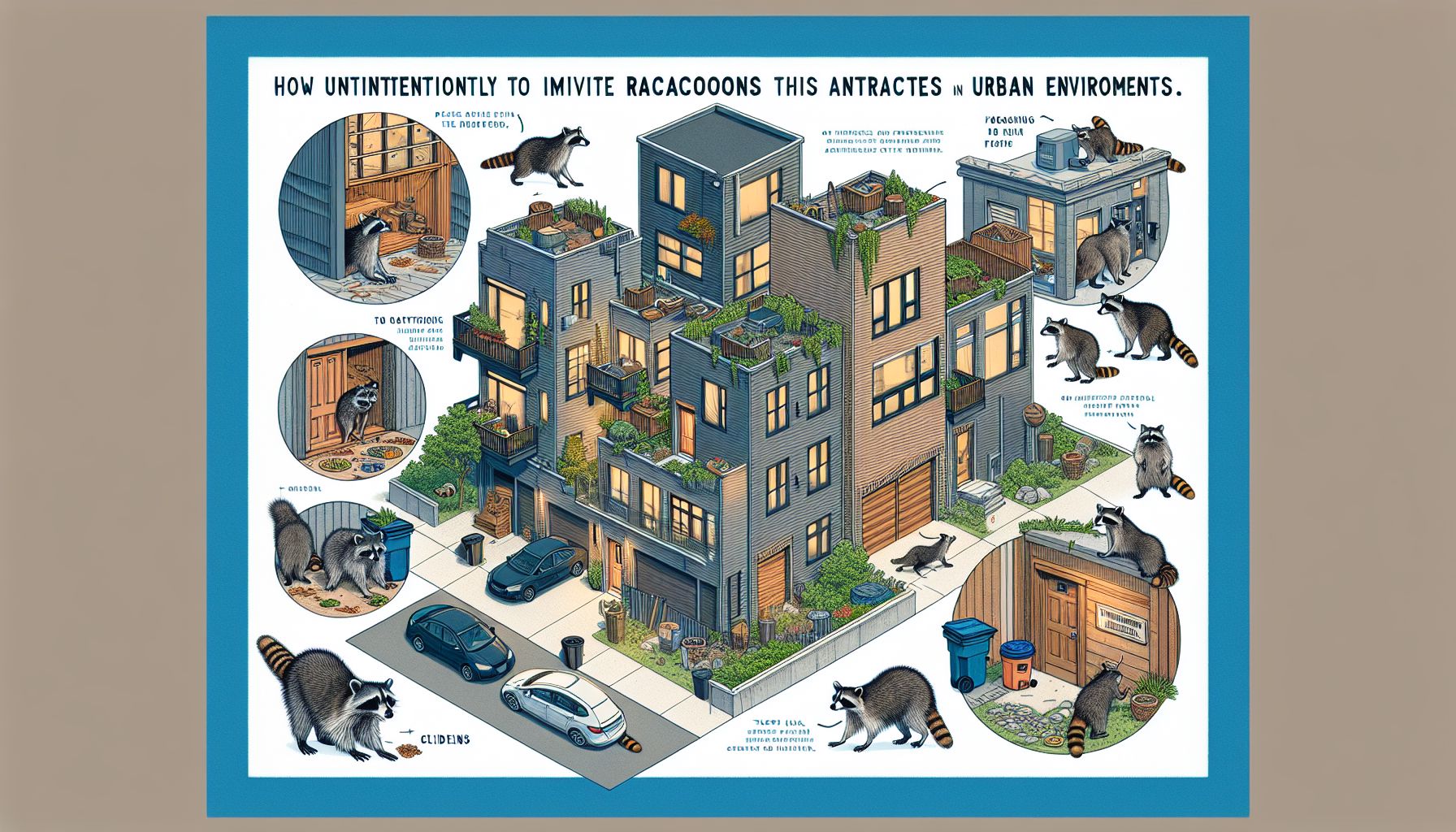
Cities often have housing design features that draw raccoons. In city landscapes, these clever creatures find food sources, hiding spots, and safe places to rear their young. This article examines characteristics of houses in the city that often attract these city-dwelling raccoons.
Architecture and Raccoon Behaviors
Many houses in the city have architectural features that attract raccoons. Raccoons are agile climbers. They are drawn to houses with trees close to walls or roofs. Tall fences, decks, and sheds provide raccoons with a route to reach roofs or balconies. Once on the roof, raccoons find chimneys appealing. In nature, raccoons nest inside hollow trees which chimney shafts resemble. Vent structures on roofs are often weak, making it simple for raccoons to tear through them and gain entry to attics.
Access to Food
Raccoons are omnivores. They eat a wide range of fruits, nuts, vegetables, and small animals. This makes city gardens an appealing food source. Additionally, fruit trees, vegetable patches, compost bins, or bird feeders can become a buffet for these creatures. Garbage cans are another major attractant. Raccoons are intelligent and have nimble hands that can pry open lids or rip into bags. They search for leftover food in trash cans, making them a prime food source.
Urban Landscaping
Urban landscaping can often create hospitable environments for raccoons. Overgrown shrubs, piles of wood, or under-deck spaces offer raccoons secure spots. These areas provide raccoons with a sense of security from predators such as dogs or humans. They offer a quiet place to rest during daylight hours before they venture out to search for food at dusk.
Seasonal Influences
In cold regions, raccoons winterize by finding warm, safe spots to survive the tough winter months. Heated houses are attractive during the cold season. Overhanging trees and shrubs provide leaf cover that is enticing for raccoons in autumn. Spring is breeding season for raccoons and females look for safe places for their kits. This can lead to a higher incident of raccoons in homes during the spring months.
Common Misconceptions
A common misconception is that raccoons in the city are always diseased or hazardous. While they can carry diseases like rabies, not all raccoons are hazardous to humans or pets. It’s essential to remember not to handle or feed raccoons. This can encourage them to lose fear of humans, which isn’t good for either party.
Legal and Ethical Constraints
In some locales, there are laws against trapping or relocating raccoons without permits. Often, relocating raccoons can cause them stress and does not solve the root of why raccoons are drawn to houses in the first place. Understanding and changing the factors that attract raccoons can be the best solution for managing them.
This article gives observations reported from houses in cities that illustrate why raccoons may find urban homes appealing. While there are ways to make houses less enticing, complete solutions often require understanding of raccoons’ behaviors. Each city may have its specifics, and therefore it’s essential to identify what needs to be changed on a case-by-case basis. Understanding why raccoons are attracted to houses in the city is a first step toward managing their presence. Future studies can focus on how to make changes to houses to deter raccoons while still maintaining a hospitable environment for humans and other wildlife.