
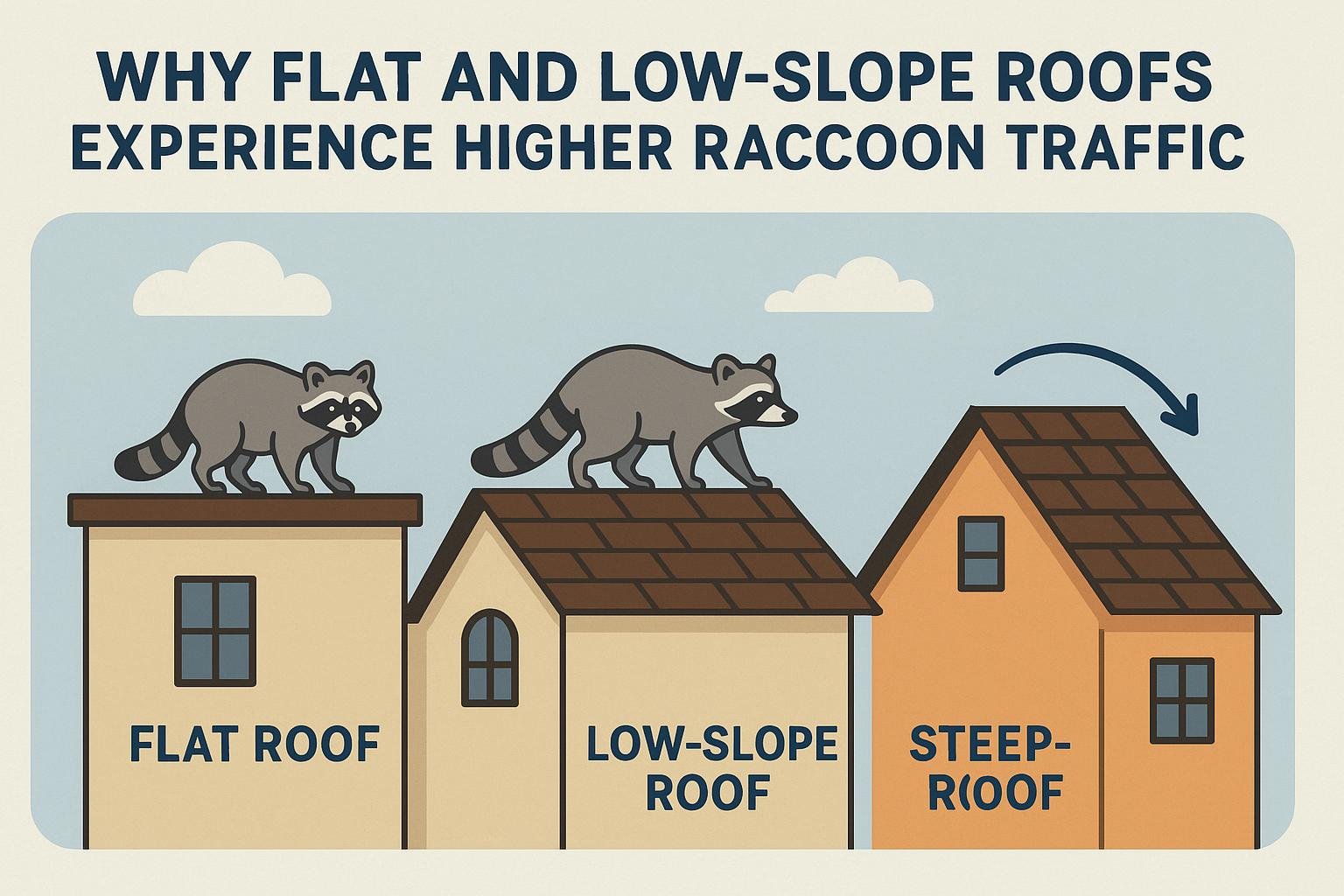
Raccoons are common urban and suburban wildlife in many parts of Ontario, including cities such as Toronto, Ottawa, and Hamilton. These animals often interact with residential buildings, especially roofs. Observations within these regions indicate that flat and low-slope roofs tend to have higher raccoon activity compared to steep-sloped roofs. Several factors contribute to this pattern, ranging from structural characteristics to raccoon behavior and urban environmental conditions. This article explores why flat and low-slope roofs attract more raccoons, relates this tendency to local housing types, and discusses seasonal and practical implications.
Raccoon Behavior and Urban Environments
Raccoons are adaptable and primarily nocturnal animals. They seek out safe resting spots and sources of food within urban and suburban settings. They often climb to elevated surfaces to avoid predators, distance themselves from human activity, or search for shelter. The roof of a house provides an appealing location for these purposes.
In Ontario’s urban areas, raccoons face limited natural spaces. They exploit the built environment to find suitable habitats. Their climbing ability allows them to access many roof types. However, not all roofs offer the same level of accessibility or comfort. In many cases, flat and low-slope roofs are easier for raccoons to navigate and use as temporary resting or foraging areas.
Structural Features of Flat and Low-Slope Roofs
Flat and low-slope roofs have a gentle incline, usually less than 10 degrees. This creates a stable surface for raccoons to walk, rest, and move around. Unlike steep-sloped roofs, these surfaces reduce the risk of slipping or falling.
In cities like Toronto and Ottawa, many commercial buildings and newer residential blocks have flat or low-slope roofs. Older homes may have steeper roofs, but contemporary architecture often favors lower slopes for economic or functional reasons.
On flat or nearly flat roofs, raccoons can stay longer and explore wider areas. The surface can also accumulate debris, leaves, and even nesting material. These materials provide both shelter and attractive habitat elements for wildlife. Raccoons may find these conditions more comfortable compared to steep roofs where footing is unstable.
Accessibility and Entry Points
Flat and low-slope roofs frequently adjoin parts of the building such as attic spaces, gutters, or ventilation systems. These areas can have gaps or openings. Raccoons exploit these vulnerabilities to enter attics or wall cavities.
In many older Ontario houses, roofing materials and flashing may deteriorate over time. Flat roofs also often have HVAC units, chimney systems, or satellite dishes that provide climbable structures. Raccoons use these to gain better access or shelter near the roof surface.
Steep roofs, by contrast, present a harder climbing challenge. They expose raccoons to more risk of falls and do not typically support lingering activity. As a result, raccoons prefer surfaces where they can easily move and explore attachment points.
Environmental Influences: Local Climate and Vegetation
Ontario’s climate includes cold winters and warm, humid summers. Raccoons respond to temperature changes and seasonal resource availability by seeking shelter in favorable spaces.
Flat and low-slope roofs often retain warmth longer during cooler periods due to heat generated inside buildings or solar absorption. This makes these spaces more inviting in spring and fall. In addition, nearby trees frequently border flat-roofed buildings in suburban neighborhoods. Tree branches can extend close to or even touch these roofs, providing easy access paths.
In neighborhoods with mature tree cover, raccoons can jump or climb across limbs to flat roofs. This connection is less common with steep roofs, which may have fewer adjacent branches or pose more complicated landing angles.
Common Misconceptions About Raccoon Roof Activity
One common misconception is that raccoons prefer roofs because they seek to nest there permanently. While raccoons do den in attics or wall spaces at times, their presence on roofs often relates to searching for food or travel routes rather than permanent residence.
Another misunderstanding is that raccoons damage only flat roofs. In reality, they can cause damage anywhere but tend to cause more noticeable wear on surfaces they frequent. Flat roofs may show more claw marks, shredded insulation, or displaced debris because raccoons spend more time there.
Some assume that raccoon activity on roofs is seasonal only. While activity can increase in spring and summer when animals seek mates or food, urban raccoons may use roofs year-round because of shelter availability and human waste access.
Constraints Explaining Raccoon Behavior Persistence
Despite awareness of raccoon presence, many flat and low-slope roofs continue to attract them. This persistence occurs because common protective measures have limits. Many roofs have features like flashing or ventilation that raccoons can penetrate if they find existing weaknesses.
Municipal regulations in Ontario restrict certain wildlife control practices during breeding seasons to protect raccoons and other urban mammals. This legal framework means that raccoon problems on roofs may return if not addressed in compliance with local rules.
The design of flat roofs also sometimes makes it difficult for building owners to monitor and maintain weak spots, increasing the chance of raccoon access and repeated visits.
Examples from Ontario Housing Types
In Toronto’s downtown area, mixed-use buildings often feature flat roofs with rooftop gardens or HVAC systems. These flat rooftops create easily navigable areas for raccoons, especially where tree-lined streets provide access.
In suburban Ottawa, many detached homes built after 1990 have low-slope roofs. These roofs sometimes support raccoon activity because of their moderate pitch and proximity to wooded backyards or parks.
In Hamilton’s older neighborhoods, homes with steep roofs are less likely to report raccoon roof access. Raccoon entry points are more frequently found in basements or crawlspaces rather than roof areas due to building design.
Pros and Cons of Flat and Low-Slope Roofs Related to Raccoon Activity
Pros:
- Flat and low-slope roofs provide easy surface area for maintenance and usage.
- They can retain heat, which may reduce winter energy costs.
- Vegetative rooftops on flat roofs may contribute to urban greening.
Cons:
- These roof types present stable surfaces favored by climbing wildlife such as raccoons.
- Accumulated debris on flat roofs offers nesting materials.
- Flat roofs are more vulnerable to damage from animal activity and water pooling.
- Greater chance of wildlife entry through adjacent vents or deteriorating seals.
Seasonal Activity Patterns and Roof Use
Raccoon use of roofs changes seasonally in Ontario’s climate. In warmer months, increased food availability draws raccoons outdoors. They use roofs as travel corridors between food sources and shelter.
During colder months, raccoons spend more time in attics or sheltered building areas. Flat roofs remain attractive because they border potential entry points and retain warmth. Spring often brings increased roaming and marking behavior as raccoons establish territories.
Urban noise and light levels can alter raccoon activity timing, sometimes encouraging daytime roof visits, though this remains less common.
Summary
Flat and low-slope roofs in Ontario’s urban and suburban areas tend to experience higher raccoon traffic due to several key factors. These roofs provide stable, accessible surfaces that support raccoon movement and resting. Structural features like vents and flashing can offer easy entry points into buildings from these roofs. Local climates and nearby vegetation also influence raccoon preference for