
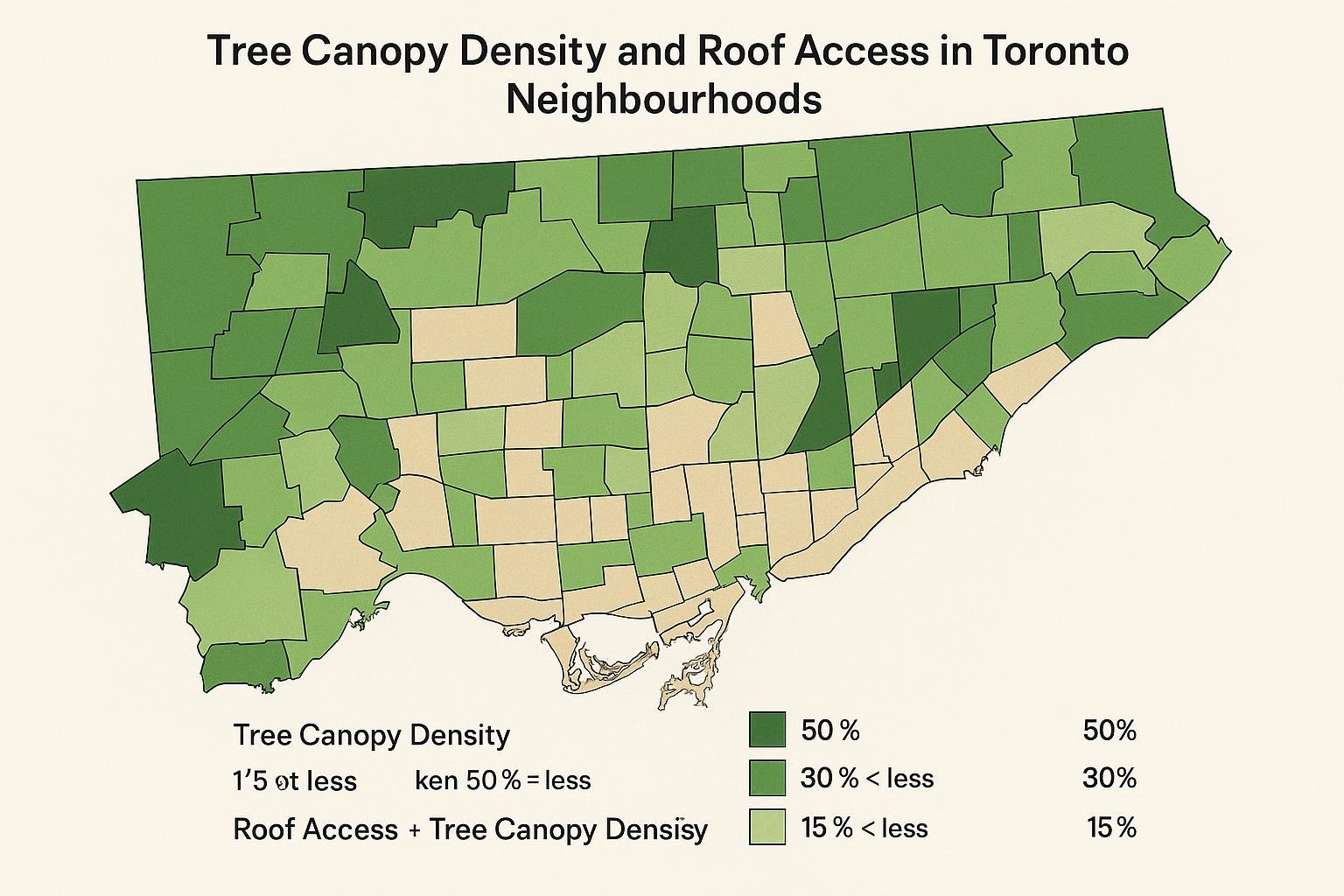
Toronto is a large city with diverse neighbourhoods. Its urban spaces include varying levels of tree canopy density and different types of roof structures. These elements affect environmental conditions and the presence of wildlife in residential areas. Understanding tree canopy density and roof access helps explain certain pest or wildlife behaviors observed in the city.
Tree Canopy Density Explained
Tree canopy density refers to the amount of ground surface shaded by tree leaves and branches when viewed from above. In Toronto, this varies significantly across neighbourhoods. Older, established areas often have mature trees with dense canopies. Newer developments and highly urbanized zones typically have fewer large trees and lower canopy coverage.
High tree canopy density contributes to cooler microclimates in the summer. It also provides habitats for birds, squirrels, and urban wildlife. Trees create corridors that allow movement for animals above ground. In contrast, areas with sparse tree coverage tend to experience higher temperatures and reduced habitat connectivity.
Variation in Tree Canopy Density Across Toronto
Toronto’s neighbourhoods differ in tree cover due to historical land use, development patterns, and municipal planning. For example:
- The Annex and Roncesvalles are older neighbourhoods with many mature street trees and shaded yards. These areas show moderate to high canopy density.
- Scarborough features a mix of dense forest patches, such as in the Rouge Valley, and sprawling residential zones with scattered trees. Canopy density varies widely in this borough.
- Newer suburbs like Etobicoke and some parts of North York often have lower tree canopy density because of recent construction and less tree preservation.
Municipal records and satellite imagery can provide canopy density estimates. Toronto’s Urban Forestry department tracks tree planting and removal to maintain or improve tree coverage over time.
Why Tree Canopy Density Matters for Wildlife and Pest Activity
Trees attract birds, insects, and small mammals. Dense canopies offer shelter, food sources such as seeds and insects, and nesting spaces. Wildlife in dense urban forests may occasionally seek alternative shelter, including attics or roof spaces when trees are close to homes.
Emerald ash borer infestations, for example, are linked to the prevalence of ash trees within tree canopies in parts of Toronto. This pest causes damage to ash populations, altering urban tree coverage and influencing bird and insect populations dependent on those trees.
Areas with low tree canopy density may see fewer tree-dependent species. However, gaps in canopy can increase urban heat islands, which affect local insect activity, sometimes raising concerns about pests like mosquitoes during summer.
Roof Structures and Access in Toronto Neighbourhoods
Toronto homes vary in roof design. Roofs may be flat, pitched, or a combination, affected by architectural style, age, and neighborhood zoning. Roofing materials include asphalt shingles, flat membranes, tiles, and metal.
Roof access points are openings or conditions that allow wildlife or pests to enter roof cavities or attics. These include vents, chimneys, soffits, eaves, and gaps around flashing. Access can be intentional, like attic ventilation, or result from deterioration or damage.
In older Toronto houses, roof access points may not be well-sealed, creating entry routes for animals. Squirrels, raccoons, and bats often use these openings for nesting or shelter. In newer constructions, building codes require better sealing and ventilation, but access can still occur through damage over time.
Relationship Between Tree Canopy and Roof Access
When tree canopy extends close to or overhangs roofs, it can facilitate wildlife movement to roof access points. Animals use branches as bridges to reach homes without descending to the ground. This increases the likelihood of entry into attics or cavities, especially if access points exist.
Toronto’s urban tree management practices sometimes include trimming branches away from buildings to reduce this risk. Dense canopies combined with unprotected roof access points raise the chance of wildlife establishing nests within roof structures.
On the other hand, neighbourhoods with sparse trees have fewer such pathways. Wildlife may have less access to roof spaces but might seek other shelter in ground-level structures or remain in green spaces.
Seasonal and Environmental Patterns Affecting Roof Access
Seasonal changes impact both tree canopy density and wildlife behavior in Toronto:
- Spring and Summer: Full leaf cover creates dense canopy environments. Wildlife activity increases with breeding season. Animals use tree branches for food and travel. Roof access points may attract animals seeking nesting sites.
- Fall: Trees lose leaves, reducing canopy density temporarily. Wildlife may explore more ground-level shelters. Roof access patterns can change as animals prepare for winter.
- Winter: Canopy cover is minimal. Some animals remain in roof cavities for warmth. Cold weather may drive wildlife from outdoor dens into buildings if access exists.
Toronto’s climate—characterized by cold winters and warm summers—also affects when animals use roofs. Roof access points become important for species that hibernate or shelter during cold months.
Common Misconceptions About Tree Canopy and Wildlife Access
One misconception is that high tree canopy density alone causes wildlife infestations in homes. While trees provide pathways and habitats, roof access depends on structural entry points and gaps.
Another misunderstanding is that removing all trees near homes eliminates wildlife access. Trees also provide environmental benefits, such as cooling and stormwater management. Complete removal might reduce habitat but can increase urban heat and affect neighbourhood ecosystems.
It is important to recognize that roof access issues result from a combination of tree proximity, building design, maintenance, and local wildlife patterns.
Legal and Regulatory Considerations in Toronto
Toronto’s municipal bylaws regulate tree removal, planting, and preservation. Protected tree species require permits to remove or prune. These rules help maintain tree canopy density in established neighbourhoods.
Building codes mandate standards for roof construction and ventilation. These aim to prevent moisture buildup and maintain structural safety but do not directly address wildlife exclusion.
Wildlife species such as bats are protected by provincial and federal regulations. Interference with bats, especially during maternity season, is restricted by law. This influences how roof access issues can be addressed legally and at certain times of year.
Why Problems Persist and Repeat Over Time
Tree canopy changes slowly due to the growth and loss of trees over years or decades. Wildlife adapts to urban environments, often finding consistent food sources and shelter near people.
Roof access points may go unnoticed or unrepaired, allowing animals to re-enter buildings repeatedly. Seasonal behavior cycles cause annual reoccurrence of certain wildlife activity.
Legal protections and regulations limit interventions during sensitive periods. Homeowners and residents may be unaware of building vulnerabilities connected to wildlife access.
Finally, Toronto’s climate and geography support diverse species that can exploit tree-to-roof pathways or access opening opportunities.
Examples of Toronto Neighbourhoods with Noted Patterns
In the Rosedale area, mature oaks and maples offer substantial canopy cover. Reports indicate occasional raccoon nesting in attics via roof access points near overhanging branches.
Similarly, High Park neighbourhood features large trees adjacent to older homes. Wildlife such as squirrels commonly use branches to reach roofs. Winter nesting behavior has been documented in attics where entry points exist.
In parts of Scarborough, with fragmented but patchy forested areas, bats have been observed roosting in roof spaces of homes situated near wooded ravines. These patterns illustrate the connection between canopy proximity and roof access use.