
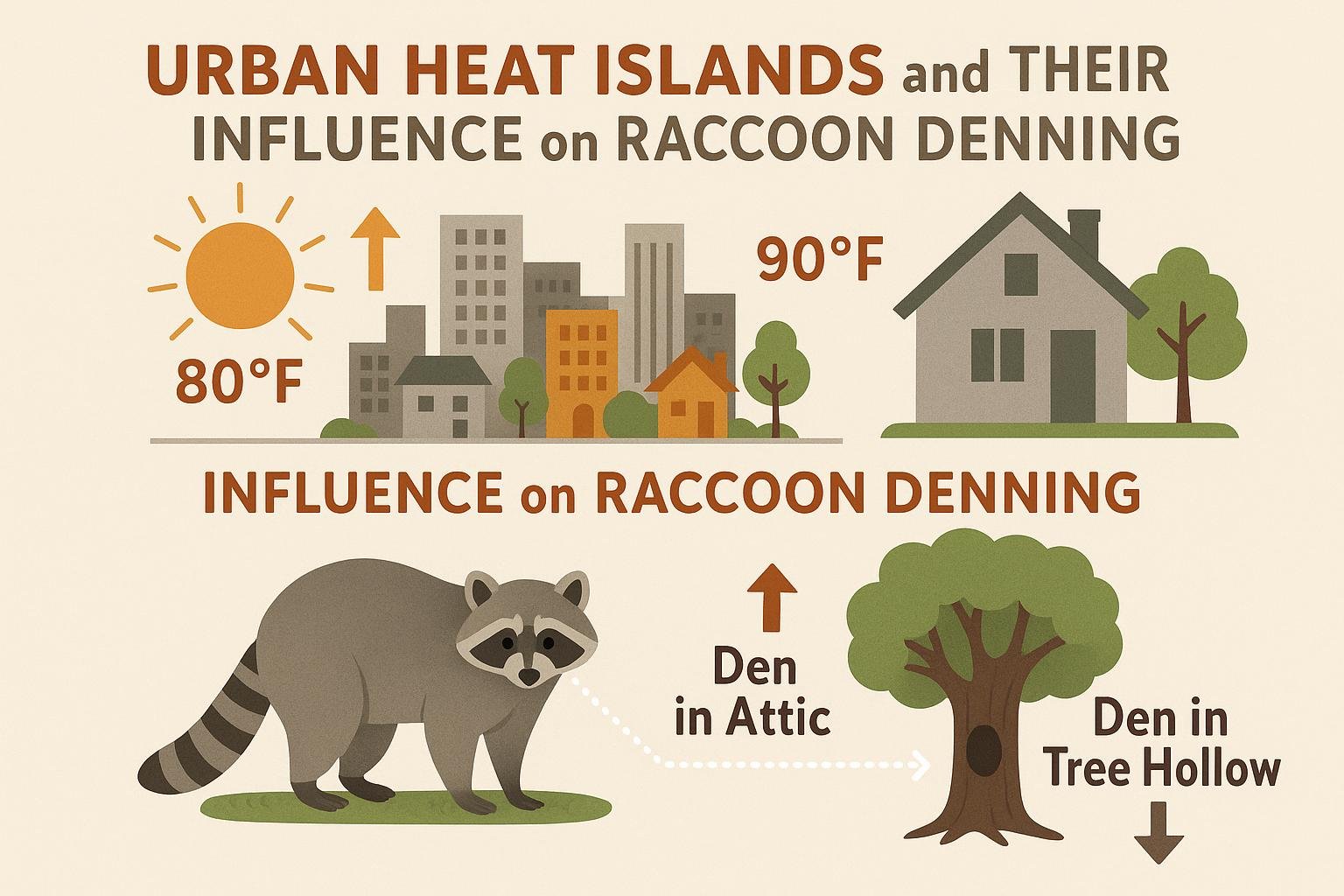
Introduction to Urban Heat Islands
Urban heat islands (UHIs) occur when built environments such as cities become significantly warmer than nearby rural areas. This warmth results from human activities, dense infrastructure, and limited vegetation. Surfaces like asphalt, concrete, and rooftops absorb and retain heat during the day and release it slowly at night. The effect causes average temperatures in many cities to be several degrees higher than surrounding countryside.
Cities in southern Ontario, including Toronto and Hamilton, frequently experience UHIs during summer months due to their dense housing and industrial zones. This temperature difference can impact local wildlife, including raccoons, altering their behavior and habitat choices.
Raccoon Behavior in Urban Settings
Raccoons (Procyon lotor) adapt well to urban areas. They are opportunistic and find food easily in garbage, gardens, and pet areas. Raccoons also use various man-made structures for shelter, such as attics, sewers, chimneys, and abandoned buildings. Urban raccoons face fewer predators but must navigate human disturbances and environmental hazards.
Raccoons create dens to rest, raise young, and seek shelter from weather extremes. These dens can be in hollow trees in suburban parks or inside wall cavities in older buildings. Temperature and safety strongly influence den choice.
How UHIs Affect Raccoon Denning
Higher temperatures in urban heat islands can change how raccoons select and use dens. Warmer nights and less temperature fluctuation reduce the need for dens to provide strong insulation. In many cases, raccoons in UHIs may use more exposed or unconventional den sites compared to rural raccoons.
Temperature Influence
Raccoons require cool, dark, and dry den spaces during hot summer days and safe shelters in winter. Urban heat islands create warmer microclimates where raccoons might forgo deeper or insulated dens because external temperatures remain within tolerable ranges. This tendency can increase raccoon presence in areas of human activity, such as building attics or crawlspaces, which provide shelter and remain relatively cool.
Seasonal Denning Changes
Raccoons typically reduce activity in colder months and rely heavily on dens to conserve energy. UHIs can soften winter cold spells, leading some raccoons to remain more active in cities than in rural settings. These animals might switch dens less frequently or choose den locations closer to food sources like residential trash bins.
Lower winter severity linked to UHIs might also extend the denning period, especially for females with young kits. The warmer environment can influence the timing of breeding and rearing young, potentially leading to shifts in denning behavior patterns.
Structural and Environmental Factors in Cities
In Toronto and similar urban areas, housing stock often includes older buildings with accessible crawl spaces and attics. These structural features provide ideal denning opportunities for raccoons. Additionally, mature street trees and parklands within a city offer natural denning options. Heat islands influence the suitability of these locations by altering temperature and humidity levels.
Urban infrastructure, such as storm drains and sewer systems, also offers secure, warm denning environments. The consistent temperature of underground sewer systems contrasts with fluctuating temperatures on the surface, especially in heat islands, and raccoons often exploit these conditions.
Common Misconceptions About Urban Raccoon Denning
One misconception is that raccoons only settle in rural or forested areas. In reality, urban raccoons have adapted to a variety of environments, including densely built areas affected by UHIs. Another misunderstanding is that raccoons always choose dens for temperature regulation alone. While temperature is critical, other factors such as safety from predators and proximity to food also influence den locations.
It is often assumed that urban heat islands only negatively affect wildlife. However, in some cases, warmer temperatures can reduce stress on animals by minimizing exposure to extreme cold. For raccoons, mild urban winters may improve survival chances, though the risk of disease transmission can also rise in denser populations.
Seasonal and Environmental Patterns Observed in Ontario Cities
Toronto and Hamilton show clear patterns of raccoon denning linked to urban heat islands. Field reports indicate raccoons emerge earlier from dens in urban cores than in less developed suburbs. Also, urban raccoons tend to shift dens more frequently during warmer months, likely responding to changes in available shelter warmth.
In winter, raccoons may remain in man-made structures longer, as urban heat islands moderate temperature drops. This behavior contrasts with rural raccoons, which often enter deeper hibernation or rely on natural hollows.
Vegetation cover influences microclimates within heat islands. Parks with dense trees provide shaded cooler spots that raccoons use during heat waves. They might move between urban parks and nearby neighborhoods as part of their habitat use.
Legal and Ethical Context in Ontario
Ontario regulations restrict interference with raccoon dens, especially during breeding seasons (spring to early summer). Removing or disturbing dens during this time can violate wildlife protection laws. The influence of UHIs on raccoon behavior means den locations may include difficult-to-access urban sites, complicating human-animal interactions.
Ethically, cities must acknowledge the role of urban environments in wildlife habitation and plan green spaces to balance heat island effects. Allowing denning behaviors in safe parts of the city benefits ecosystem functioning and animal welfare.
Challenges and Limitations in Managing Urban Raccoon Denning
Urban heat islands create microhabitats that raccoons exploit, but they also generate challenges for both wildlife and human residents. Warm conditions in urban dens may increase parasite loads or diseases carried by raccoons. This factor can contribute to public health concerns without causing animals to vacate prime den sites.
Structures provide abundant shelter, yet aging buildings often have vulnerabilities that invite raccoon entry. Even with maintenance efforts, raccoons persist due to the availability of heat island effects maintaining favorable microclimates inside walls and roofs.
Seasonal changes and weather variability further complicate predictability. Extreme heat waves or sudden cold snaps may alter raccoon denning behavior unpredictably. This uncertainty is typical for urban wildlife and underlines why patterns should be observed over multiple years.
Example Case: Toronto Neighborhoods
Data from Toronto’s older urban neighborhoods show raccoons increasingly occupy attics and chimney spaces during warm months. The UHI effect moderates dramatic temperature swings, making man-made structures consistent shelters. In summer, raccoons avoid direct roof exposure during hot days by retreating to shaded attics.
In suburban fringe areas with more green space but less heat buildup, raccoons often select tree hollows or thick shrubbery. This contrast reflects how urban heat islands create distinct wildlife microhabitats within the same metropolitan region.
Conclusion
Urban heat islands influence raccoon denning behavior by altering local temperatures and habitat conditions. In southern Ontario cities like Toronto and Hamilton, warmer urban cores support year-round raccoon activity and flexible den choice. Structures with stable temperatures inside the heat island attract raccoons, especially during extreme weather.
This dynamic shapes the interaction between humans and urban wildlife, showing the need to understand environmental patterns affecting animal behavior. While UHIs provide warmer refuge, they may also raise challenges related to disease and building damage. Observing these patterns remains valuable for managing coexistence in cities dominated by urban heat islands.