
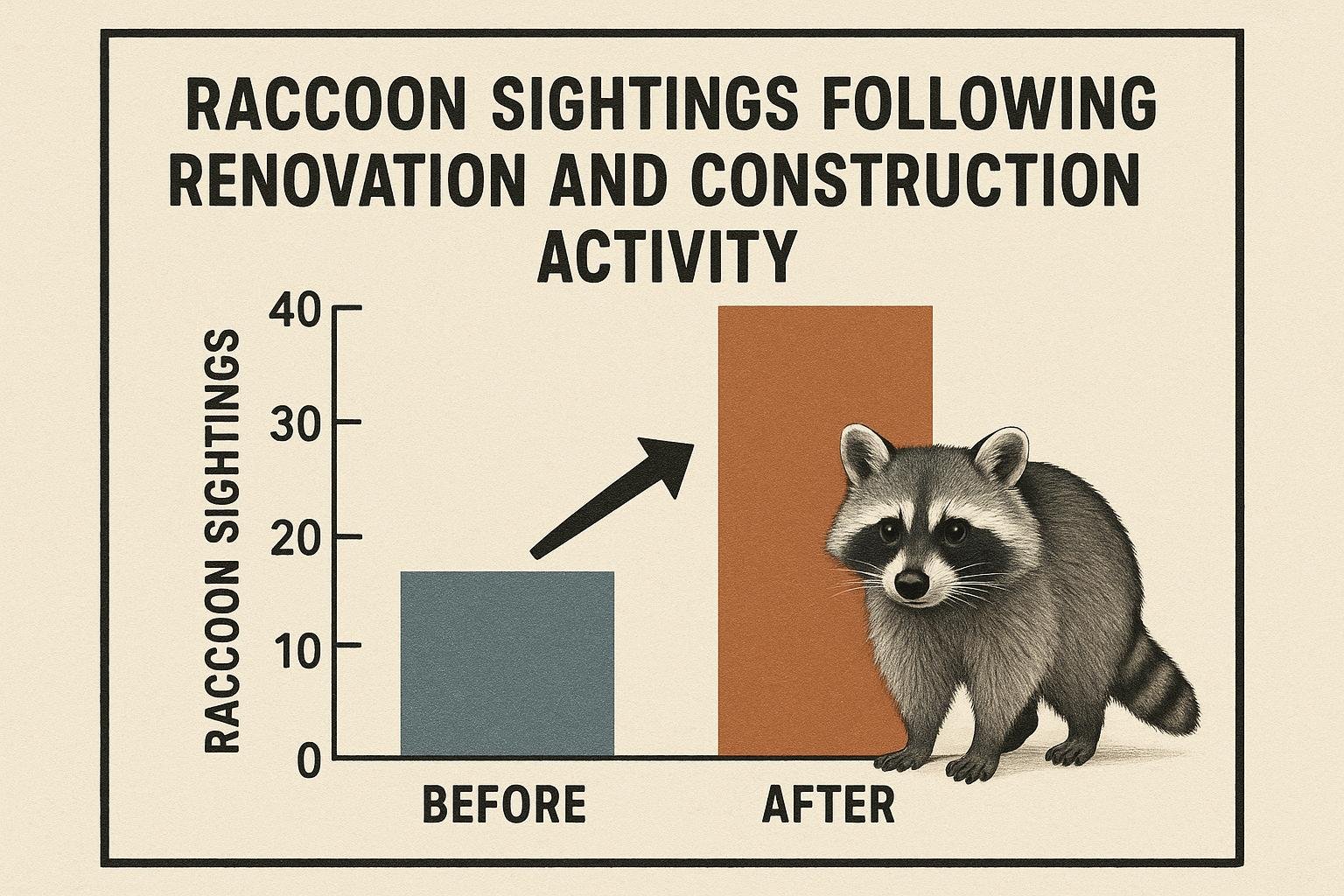
Raccoon sightings often increase after renovation or construction work takes place in a neighborhood. Many residents in cities like Toronto, Ottawa, and other parts of Ontario notice more raccoons around their properties after nearby work disturbs the environment. Understanding why this happens involves looking at the natural behavior of raccoons, how construction changes habitats, and the impact on local ecosystems.
Why Raccoons Appear More After Construction
Raccoons live in urban, suburban, and rural areas across Ontario. They prefer quiet and sheltered habitats, such as wooded areas, abandoned buildings, or dense vegetation. Construction and renovation work typically disrupt these spaces. Noise, vibration, and movements can drive animals out of their usual hiding places. This disruption causes raccoons to search for new habitats or food sources closer to human dwellings.
Renovation activities may include removing trees, digging soil, or tearing down old structures. Each action modifies the local environment and may remove or reduce natural shelters for raccoons. As a result, raccoons move towards nearby homes, often seeking attics, decks, or sheds for safety.
Urban and Suburban Housing Impact
Ontario’s urban neighborhoods often contain older houses with features like wooden eaves, chimneys, and loose siding. These provide easy access points for raccoons seeking shelter. Construction around these houses can accidentally open new entry points or expose hidden gaps, making it easier for raccoons to enter.
Older homes built with materials and designs common decades ago sometimes have loose or weakened areas. Construction work may involve removing or repairing these parts, which temporarily leaves the property vulnerable. Raccoons are adaptable and opportunistic, so they exploit these openings to rest during the day or hide from predators.
Seasonal Factors in Raccoon Activity
Raccoon behavior varies by season, and this timing can affect sighting frequency after renovation.
- Spring: Raccoons leave dens and search for mates and food. Disturbance in this period drives raccoons to move quickly.
- Summer: Mothers rear their young and seek quiet nurseries. Construction during summer forces family groups into new areas, often near homes.
- Fall: Raccoons increase feeding to prepare for winter. Nearby renovation may push them into residential areas with accessible food waste.
- Winter: Raccoons usually den but can move frequently in warmer winters or milder urban climates if disturbed.
Construction occurring in the spring or summer often causes more visible disruptions in raccoon patterns than work timed in the winter.
Common Misconceptions About Increased Raccoon Sightings
Residents frequently misinterpret the increased raccoon presence following construction. One common belief is that renovation work attracts raccoons by providing food. In many cases, construction disturbs nearby food sources rather than creating new ones. Raccoons instead move to find existing food in trash bins, bird feeders, or gardens.
Another misconception is that raccoons become aggressive or intentionally invade homes due to human activity. Raccoons generally avoid humans and enter properties only when seeking shelter or food. Their increased sightings reflect displacement rather than unusual behavior changes.
Environmental and Structural Causes of Raccoon Encroachment
Raccoons depend heavily on available food, water, and shelter. Renovation projects usually alter one or more of these factors:
- Shelter loss: Trees, shrubs, or abandoned buildings may be removed. This loss removes typical nesting locations.
- Habitat fragmentation: Construction divides continuous green spaces, forcing raccoons to navigate more human areas.
- Access to human dwellings: Construction can create gaps or openings in roofs and walls.
- Food disruption: Disturbed soil or unearthed trash bins can expose food scraps previously hidden underground.
In places like southern Ontario, where urban sprawl encroaches on former rural or woodland zones, raccoons already adapt to human spaces. Construction accelerates this transition by reducing natural areas.
Why Raccoon Problems May Recur Post-Construction
Raccoons are intelligent and persistent animals. Once they find shelter near a home, they may return repeatedly or bring family members.
Many houses have external features inviting raccoons because of easy climbing surfaces like fences, trees, or latticework. Renovation alone does not remove all these access points and may inadvertently add new ones.
Temporary disturbance from construction may only displace raccoons briefly, but as work ends, animals explore and recolonize available spaces. This repeated pattern contributes to seasonal or ongoing sightings after initial activity.
Legal and Ethical Considerations in Ontario
Ontario wildlife laws protect raccoons from harm or illegal trapping. Municipal regulations may restrict wildlife control efforts within city limits. Homeowners must abide by these rules when addressing raccoon presence.
Many municipalities also restrict construction or animal control during the spring breeding season to protect nursing female raccoons and their young. This timing can delay any removal or exclusion efforts, allowing animals to remain temporarily.
The legal framework balances protecting wildlife with reducing human-wildlife conflicts. Continuous sightings after renovation often reflect these temporary protections and natural animal cycles.
Examples of Raccoon Patterns in Ontario Neighborhoods
Field reports from several Ontario cities show similar trends in raccoon sightings after construction work:
- In older Toronto neighborhoods with many pre-1950 homes, residents observe raccoons entering attics after roof repairs.
- In Ottawa’s suburban zones, tree removal for new housing developments drives raccoons into backyard sheds.
- In communities around Hamilton, disturbed riparian areas from infrastructure upgrades prompt raccoons to seek shelter near homes.
- Smaller towns with limited green space also report increased raccoon activity following excavation or building renovation.
These regional examples confirm that construction-related disturbances affect raccoon behavior consistently in the province.
Pros and Cons of Increased Raccoon Presence After Construction
Pros
- Raccoons help control insect and rodent populations naturally.
- Their presence can indicate the health of local ecosystems despite urban pressures.
- Observing wildlife may increase awareness of natural surroundings.
Cons
- Raccoons may damage property by nesting in attics or tearing insulation.
- They sometimes spread parasites, such as raccoon roundworm.
- Increased sightings can lead to conflicts or safety concerns, especially if animals scavenge human food.
Conclusion
Raccoon sightings often rise following construction or renovation due to habitat disruption. Noise, removal of shelter, and altered food sources drive raccoons to explore new areas, including nearby homes. Ontario’s older housing stock, seasonal changes, and wildlife protection laws all influence these patterns.
Understanding these factors clarifies why raccoon presence increases and why the problem may persist after work ends. These animals adapt quickly to urban environments but also face challenges from human activities. Observations from Ontario cities show that raccoon behavior closely ties to changes in their habitat caused by construction.